
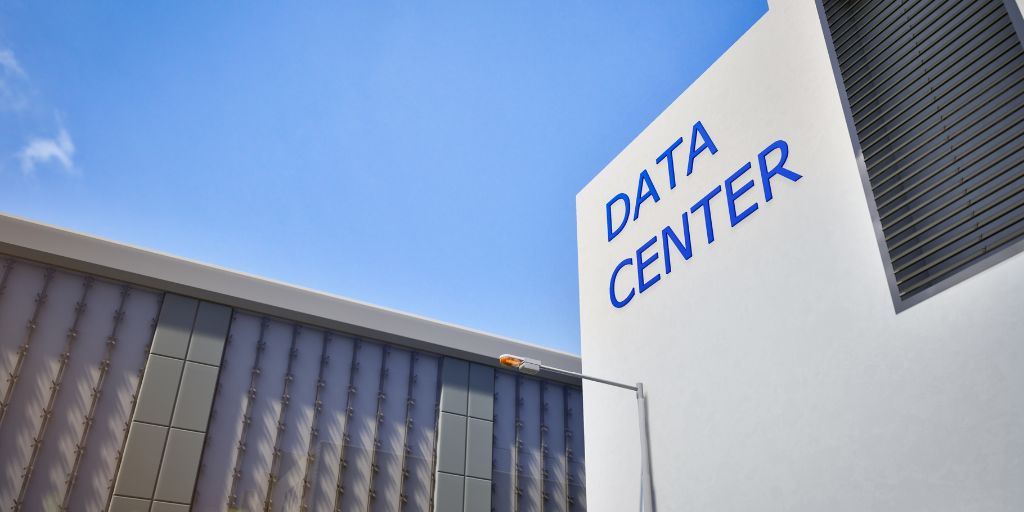
A data centre houses the most critical assets of any organisation: servers, storage systems and the infrastructure that underpins entire operations. Protecting these environments goes far beyond firewalls and logical access protocols. Data centre security demands a robust physical protection strategy, capable of neutralising threats before they ever reach the equipment. The following sections explore the perimeter security systems and criteria that every critical infrastructure manager needs to know and apply.
Why perimeter security defines the resilience of a data centre
The majority of physical incidents at data centres originate from inadequate perimeter protection. Unauthorised access, sabotage or hardware theft can irreversibly compromise operational continuity. For this reason, international standards such as ANSI/TIA-942 — which classifies data centres into four availability tiers (Tier I to Tier IV) — include explicit physical protection requirements from the most basic level upwards.
According to the Uptime Institute Global Data Center Survey 2023, 43% of data centre managers reported that physical incidents — including unauthorised access and sabotage — represented a real threat over the previous three years. This makes clear that perimeter security is not an optional add-on, but a structural component of system resilience.

Protection layers: the defence-in-depth model
The physical protection of a data centre is built around concentric layers. Each layer adds a level of resistance against potential intrusions, so that breaching one does not automatically compromise the entire facility.
First layer: the outer perimeter. High-resistance security fencing, anti-ram walls and vehicle barriers define the site boundary. Higher-criticality installations incorporate certified bollards and vehicle containment elements designed to prevent deliberate ramming attacks.
Second layer: access control. Biometric solutions — fingerprint readers, facial recognition or hand geometry scanners — ensure that only authorised personnel can enter sensitive areas. Security turnstiles and anti-passback airlocks prevent piggybacking, whereby an unauthorised individual gains entry by following an authorised person through a secured door.
Third layer: perimeter detection. This is where motion sensors, vibration detectors, microphonic cable systems and microwave barriers converge. These devices create a virtual wall around the building. Any disruption triggers an immediate alert at the alarm receiving centre.
Fourth layer: interior surveillance. CCTV cameras with intelligent video analytics, infrared sensors and presence detectors cover corridors, server rooms and internal access points. This layer acts as a safety net for any intrusion that has bypassed the outer barriers.
Technology systems for data centre security
The selection of technology systems must be driven by a risk assessment specific to each installation. Nevertheless, certain components are essential in virtually every physical protection scenario.
Thermal cameras can detect presence in conditions of total darkness, fog or heavy rain, without relying on ambient lighting. They are particularly effective on large outdoor perimeters where lighting coverage is limited or inconsistent.
Ground radar systems provide coverage from 700 to 1,500 metres, detecting people, vehicles and other physical objects regardless of weather conditions. Their ability to distinguish genuine alerts from false alarms makes them a high-value component in Tier III and Tier IV installations.
Fibre optic detection systems monitor any vibration or disturbance along the perimeter fence. Should anyone attempt to cut or climb it, the system pinpoints the exact location of the incident and generates an alert for operators. To explore the full range of available solutions, it is worth reviewing the different types of perimeter security systems and assessing which best suit the physical characteristics of the site.

Video surveillance and centralised management: the integration that makes the difference
Video surveillance is the thread that ties all protection layers together. Modern systems incorporate AI-powered video analytics, capable of automatically detecting anomalous behaviour, abandoned objects or perimeter crossings. This reduces the cognitive load on security personnel and shortens incident response times.
Centralised management integrates access control systems, video surveillance, perimeter detection and even fire alarms into a single platform. This convergence enables a coordinated response to any event and produces auditable records — essential for forensic analysis following an incident.
The most demanding data centres connect all their systems to a dedicated alarm receiving centre, staffed by operators who verify alerts in real time and activate response protocols without delay. This approach mirrors the one applied to other high-availability critical infrastructures, where operational continuity leaves no margin for error.

Conclusion: physical security as the cornerstone of operational continuity
Data centre security cannot rely solely on logical solutions. Perimeter protection, access control and intelligent surveillance form the first shield against tangible threats. Designing that shield requires a detailed engineering study, tailored to the site topology, criticality level and applicable regulations.