

Photovoltaic plants represent significant investments that require precise and continuous management to ensure their profitability. Monitoring systems for photovoltaic plants are the operational brains of these facilities, transforming complex data into actionable information that allows for optimizing performance, reducing maintenance costs, and extending asset lifespans. In an environment where every kilowatt-hour generated has a direct impact on the return on investment, having an advanced monitoring system is not a luxury but a strategic necessity for operators and owners seeking to maximize the efficiency of their solar plants.
Comprehensive Architecture of a Monitoring System for Photovoltaic Plants
Modern monitoring systems for industrial-scale photovoltaic installations are configured following a multi-layer architecture that ensures efficient data collection, transmission, and analysis:
Data Acquisition Layer
At the foundation of the system are the devices responsible for capturing operating parameters:
- Advanced Meteorological Sensors: These include high-precision pyranometers for measuring solar radiation, ultrasonic anemometers for wind speed, ambient and module temperature sensors, rain gauges, and relative humidity sensors.
- Electrical Measurement Equipment: Three-phase grid analyzers, bidirectional meters, string meters (strings of panels), and strategically distributed DC and AC sensors.
- Equipment Monitoring Devices: Specific monitors for inverters, solar trackers, transformer substations, and energy storage systems.
- Visual inspection systems: Automated thermal imaging cameras that can detect hot spots on panels, high-resolution cameras for remote inspection of the physical condition of modules, and drones equipped with multispectral sensors.
Communication and Transmission Layer
The data generated must be collected and transmitted reliably:
- Redundant communication networks: These combine wired (industrial Ethernet, fiber optic) and wireless (4G/5G, LoRaWAN, industrial Wi-Fi) options to ensure continuous availability.
- Data concentrators: Edge computing devices that collect information from multiple sensors, perform initial processing, and optimize transmission.
- Backup power systems: UPS and standalone power supplies that ensure uninterrupted operation of the monitoring system even during network failures.
- Standardized communication protocols: Such as Modbus TCP/IP, OPC-UA, or IEC 61850, which facilitate interoperability between equipment from different manufacturers.
Processing and Analysis Layer
The true value of the system lies in its ability to transform data into operational intelligence:
- Dedicated photovoltaic SCADA: This enables centralized monitoring and control of all plant subsystems.
- Cloud analytics platforms: Process massive volumes of data using algorithms specific to the photovoltaic sector.
- Artificial intelligence engines: Implement predictive models to anticipate failures, optimize production, and facilitate condition-based maintenance.
- Digital twin systems: Create virtual representations of the plant that enable advanced simulations and comparisons between actual and theoretical performance.
Integration of physical security into monitoring systems for photovoltaic plants
Modern photovoltaic plants, often located in isolated areas and occupying large areas of land, require advanced security systems that integrate seamlessly with the monitoring infrastructure:
Smart perimeter systems
- Perimeter sensors: Detect vibrations, intrusions, or power outage attempts, generating immediate alerts in the central system.
- Microwave and infrared barriers: Create virtual detection zones adapted to the topography of the facility.
Analytical Video Surveillance
- Thermal cameras with AI: They can distinguish between people, animals, and other objects, reducing false alarms even in zero-visibility conditions.
- Self-tracking PTZ systems: Motorized cameras that automatically follow detected targets, providing active surveillance without human intervention.
- Advanced Video Analytics: Detect suspicious behavior, abandoned objects, or access to restricted areas, integrating these alerts into the main SCADA system.
- Scheduled Surveillance Drones: They follow predefined routes, verifying the physical status of the panels and perimeter security, sending images to the control center.
Integrated Security Operations Center
Within the overall monitoring system, the physical security module must allow for:
- Unified alarm management: Technical and security alarms on a single platform, with tiered escalation protocols.
- Immediate visual verification: In the event of any technical or security anomaly, automatic activation of the nearest cameras.
- Coordination with external services: Interface with alarm receiving centers and security forces.
Integrating these security subsystems into the overall monitoring platform allows seemingly disparate events to be correlated: a drop in production could be related to attempted theft or vandalism, thus optimizing operational response.
Critical components of monitoring systems for photovoltaic plants
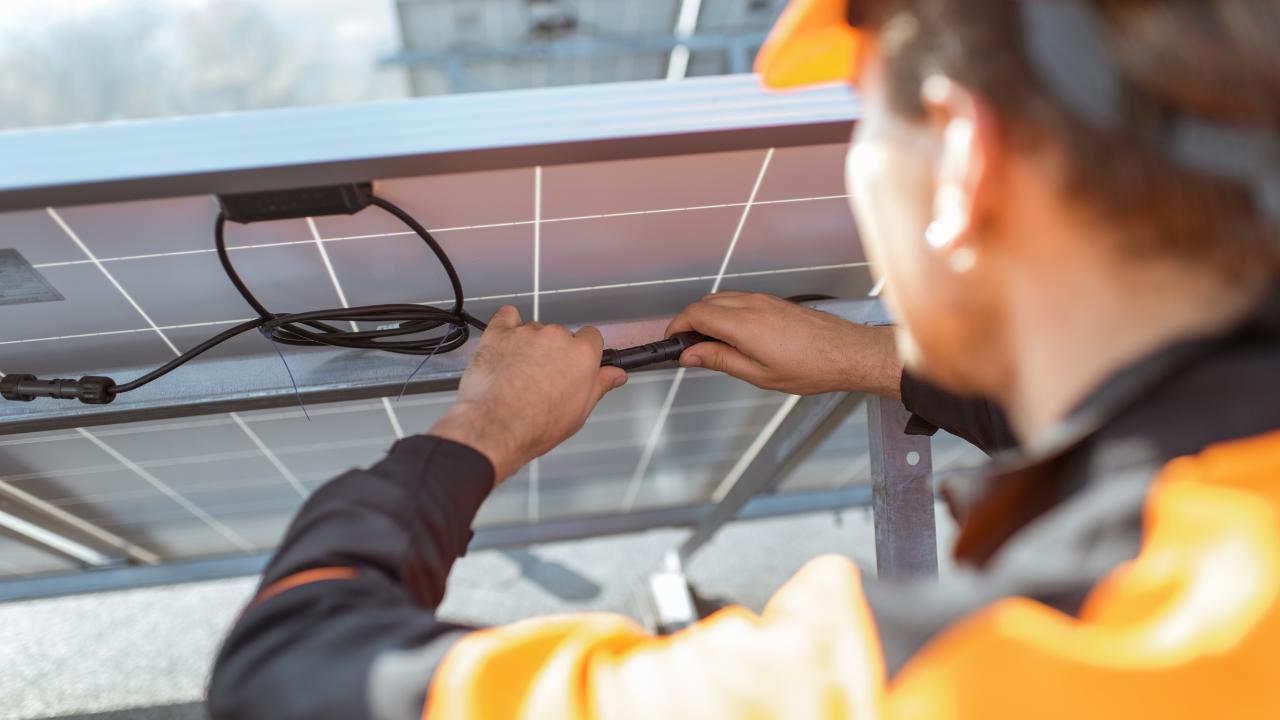
The effectiveness of a monitoring system depends on the quality and expertise of its individual components:
String-Level Monitoring
This represents a higher level of detail than traditional inverter-level monitoring:
- Intelligent combiner boxes: In addition to grouping panel strings, they incorporate sensors that monitor the individual performance of each string.
- I-V curve analyzers: These allow the electrical characterization of each string to detect specific degradations or faults.
- Arc Flash Detection Systems: These identify this dangerous phenomenon that can cause fires, integrating alerts into the central system.
Advanced Inverter Control
Modern inverters incorporate sophisticated monitoring capabilities:
- Harmonic and Grid Quality Monitoring: Essential for meeting connection requirements in large plants.
- Advanced Anti-Islanding Systems: These constantly verify the grid connection to prevent dangerous operations in the event of a general outage.
- Reactive Power Controls: These allow this parameter to be regulated according to the grid operator’s requirements, monitoring compliance. Internal Degradation Detection: Monitor critical components such as capacitors or cooling systems to anticipate failures.
Advanced Meteorological Systems
Accurate environmental measurements are crucial to properly assess performance:
- Redundant weather stations: Strategically distributed to capture microclimatic variations within the plant.
- Dirt Sensors: Quantify dust accumulation on panels to optimize cleaning cycles.
- Local Weather Forecast Systems: Integrate satellite data and predictive models to anticipate production.
- Spectral Irradiance Meters: Analyze not only the intensity but also the composition of the received sunlight, relevant for certain photovoltaic technologies.
Emerging Technologies in Monitoring Systems for Photovoltaic Plants
The sector is constantly evolving, incorporating innovations that transform monitoring capabilities:
Automated Inspection Using Robots and Drones
- Cleaning Robots with Integrated Sensors: Combine maintenance with inspection, detecting anomalies during their routines.
- Drones with multispectral cameras: Perform scheduled “inspection flights” that generate thermal maps and identify defective cells.
- Autonomous ground vehicles: Equipped with specific sensors, they roam the plant, taking near-field measurements that are more precise than aerial ones.
AI and machine learning-based monitoring
- Anomaly detection algorithms: Identify unusual behavior patterns even before they significantly affect performance.
- Predictive maintenance systems: Calculate the probability of component failure based on historical data and current conditions.
- Dynamic operational optimization: Adjust operating parameters such as solar tracker angles or inverter operating points according to changing conditions.
Blockchain for energy certification
- Production traceability: Every kilowatt-hour generated is immutably recorded, facilitating renewable energy certification.
- Automated smart contracts: Link monitoring to power purchase agreements, executing automatic settlements based on verified production.
Selecting the Right Monitoring System for Photovoltaic Plants
Choosing the optimal system must consider several factors tailored to each project:
Assessment of Specific Needs
- Plant size and type: Needs vary significantly between facilities of different scales and technologies.
- Regulatory Requirements: Some markets require specific monitoring and reporting capabilities.
- Performance Objectives: These determine the level of granularity required for monitoring.
- Environmental Conditions: Facilities in extreme environments (deserts, high mountain areas) require particularly robust systems.
Technical Selection Criteria
- Scalability: Ability to grow with the plant or adapt to future expansions.
- Interoperability: Compatibility with existing equipment and industry-standard protocols.
- Reliability and Redundancy: Critical systems must have backups to ensure their continuous operation.
- Metrological Accuracy: Especially important in plants subject to rigorous energy audits.
Economic Considerations and ROI
- Total Cost of Ownership: Includes not only the initial investment but also maintenance, upgrades, and energy consumption.
- Impact on Performance: An advanced system can increase production by 3-7% through operational optimization.
- Reduction in Operating Costs: Primarily through preventative maintenance and reduction of unnecessary service calls.
- Extended service life: Early detection of problems can significantly extend the operational life of components.
Conclusion: Monitoring Systems as the Nerve Center of Modern Photovoltaic Plants
Monitoring systems for photovoltaic plants have evolved from simple monitoring tools to comprehensive management platforms that directly determine profitability and operational efficiency. The integration of physical security, advanced analytics, and artificial intelligence is transforming the sector’s operating paradigm, enabling previously impossible levels of automation and optimization.
In a context of increasing competitiveness in the energy market, where every percentage increase in efficiency has a direct impact on profitability, investing in an advanced monitoring system should not be viewed as an additional cost but as a value multiplier for the entire facility. Photovoltaic plants that implement these comprehensive systems not only produce more energy with the same assets, but also do so for longer periods of time and with lower operating costs, maximizing the return on one of the most promising energy investments of our time.